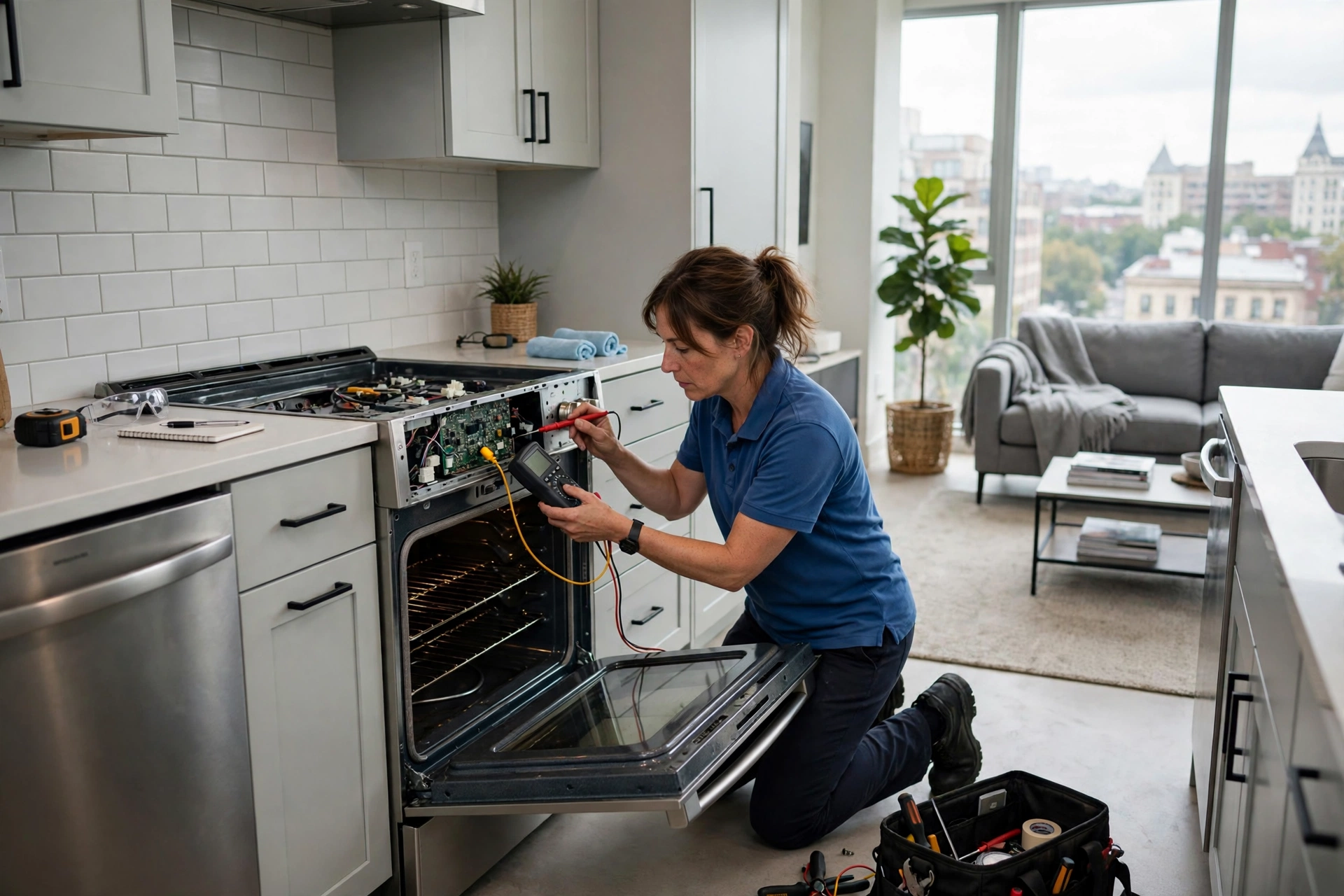
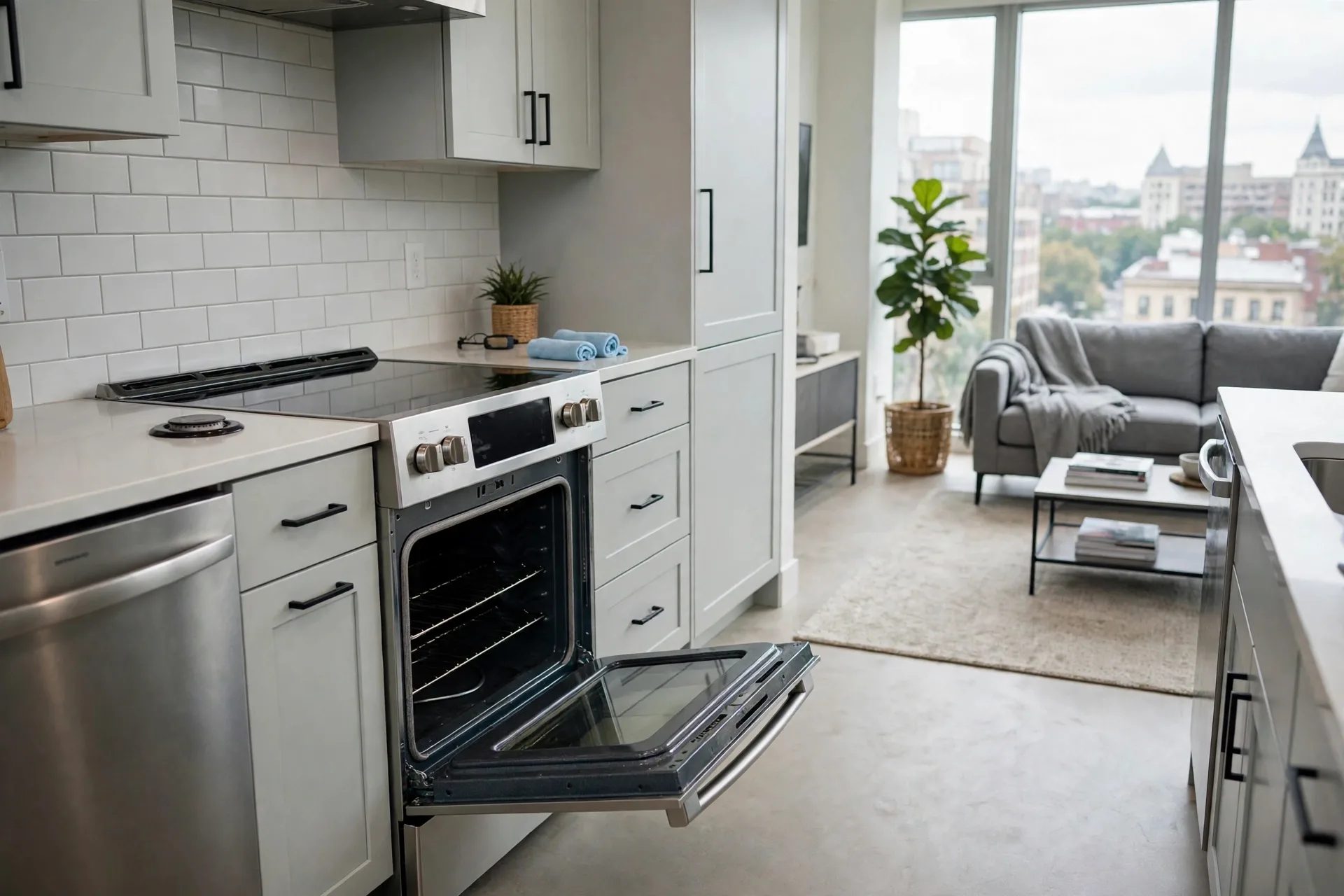
Washington DC Appliance Repair Co sends its own technicians across Washington for oven and range repair: readings first, a written quote second, and the repair third, in that order every time.
Oven and Range Repair in Washington, DC by Washington DC Appliance Repair Co
Washington DC Appliance Repair Co does oven and range repair the slow way on purpose: test, document, quote in writing, then repair, so the figure you approve is the figure you pay.
An oven that will not hold temperature ruins dinner slowly, ten degrees at a time, until somebody notices every roast runs long. We repair ovens and ranges, gas and electric, freestanding and slide in, including the dual fuel models that pair a gas cooktop with an electric oven. Washington households tend to discover oven trouble in batches: after storms, during heat waves, and in the first cold week, when machines that were quietly aging all decide together.
Experience in Washington means knowing what the housing does to the machines. Washington's housing runs from Capitol Hill rowhouses and Georgetown townhouses to condo towers in Shaw and Logan Circle and single family streets in Chevy Chase and Brookland, and every housing type keeps its own appliance profile. Basement laundry lives damp, garage refrigeration lives hot, and upstairs everything lives at the end of a long water run; the diagnosis starts from those facts.
Oven and Range Repair Problems We Diagnose and Repair in Washington
Temperature and baking faults
A dead broiler is its own circuit on most ranges; we test the element or burner independently so the quote covers only what failed. Steady temperature error is the friendliest oven fault: a drifting sensor or a control that needs calibration, verified with a thermometer across three test cycles. Uneven baking with a working sensor points lower: a bake element with a blistered section, or a gas bake burner with clogged ports along one side. Gas ovens that light and later die mid bake are the classic weak igniter story: the igniter glows, but not hot enough to keep the safety valve open as the cycle repeats. Summer storm flickers age control boards across whole wards at once here.
Burners, igniters, and cooktop faults
A gas burner that clicks without lighting may be a fouled spark electrode, a cracked igniter wire, or food debris bridging the burner ports. A coil that only knows full blast has typically lost its control switch; the element tests fine and the switch is the repair. Induction and radiant tops report their own errors, and a dead zone is tested at the element and the board before either is condemned. The visit record stays with the household, readings and part numbers included, wherever in DC the home sits.
Doors, controls, and safety
Heat escaping at the door shows up as a hot control panel and long preheats. Hinges, springs, and the door gasket are all serviceable parts. Gas safety is non negotiable: any smell of unburned gas ends the visit until the source is found, and valves and igniters are replaced, never adjusted into working one more season. Self cleaning cycles are hard on locks and boards; a door locked shut after a clean cycle is a known pattern with a known fix path. Condo and co-op rules in buildings from Foggy Bottom to Chevy Chase shape visit planning, and the form is where that planning starts.
How We Diagnose Oven and Range Repair in Washington
We test temperature the way bakers experience it: a thermometer in the cavity, readings at preheat and across two full cycles, plus element and igniter current draw on the meter. Georgetown and Dupont Circle kitchens are repaired in place by owners who value the machines they have.
Recent Project: Oven and Range Repair in Columbia Heights
BEFOREAFTER
A call from Columbia Heights: Cooktop burner clicking with no flame. Testing found boil over residue bridging the burner ports and a cracked spark electrode. We cleaned the burner assembly, fitted a new electrode, and test lit every burner. Petworth, Shaw, and Columbia Heights rentals route turnover work through written findings as standard practice.
Turnaround
Finished in one visit.
Final Price
$290
Oven and Range Repair Cost in Washington, DC
The published guides put cooking repairs around $214 on average. Expect $165 to $380 for the work described here, with igniters, switches, and sensors low in the band and boards at the top. There are no parts ordered on a hunch: the figure follows the diagnosis, in writing, and it holds for the work described. Anacostia and Congress Heights households get the identical diagnostic standard as any address in the city; the map changes nothing.
Why Washington Calls Washington DC Appliance Repair Co for Oven and Range Repair
Cooking faults hide inside averages: an oven can read 350 on the display and hold 310 in the cavity. We quote from thermometer readings and current draw, so the repair targets the part that is actually lying to you. If the repair stops making sense at any point in the diagnosis, you hear it at that point, with the numbers. That rule has cost us jobs and earned us the neighborhood, and it is not changing. A repair in the District is proven under load before it is called finished, rowhouses and high rises alike.
Request an Appliance Repair Quote in Washington, DC
Tell us what the oven is doing, or not doing, on the form and we will take it from there: diagnosis first, one written figure, and the repair done properly.
Frequently Asked Questions
Why does my oven take so long to preheat?
Slow preheats usually mean a weak igniter on gas models or a bake element losing a section on electric ones. Both are standard repairs, and both are confirmed with a meter and a thermometer before we quote. The visit record stays with the household, readings and part numbers included, wherever in DC the home sits.
My gas burner clicks but will not light. What is wrong?
Start with the simple causes: debris in the ports and a coated electrode stop more burners than failed parts do. If cleaning does not restore the spark, we test the module and the switch. The District's housing runs from Capitol Hill rowhouses to Cleveland Park colonials, and every diagnosis starts with the building in front of us.
Is a drifting oven temperature worth repairing?
Temperature drift is among the best value repairs in cooking: a sensor or a calibration, confirmed against a thermometer, and the oven bakes true again. Summer storm flickers age control boards across whole wards at once here.
What does the diagnostic visit cost?
Published guides put a diagnostic visit at $75 to $125, usually credited toward the repair. For cooking appliances it includes temperature verification with a thermometer, so the quote you get is tied to measured performance. A repair in the District is proven under load before it is called finished, rowhouses and high rises alike.
Can you repair a oven door that will not close properly?
Door work is routine: hinges, receiver brackets, springs, and the gasket. We check the seal hot, because a gasket that looks fine cold can leak badly at temperature. District water hardness writes scale into elements and inlet valves on a schedule we know by heart.
Do you repair dual fuel ranges?
Yes. Dual fuel models pair a gas cooktop with an electric oven, and we test both systems on their own terms: igniters and valves above, elements and sensors below. Condo and co-op rules in buildings from Foggy Bottom to Chevy Chase shape visit planning, and the form is where that planning starts.
Get Your Appliance Repair Quote
One form covers repairs and installations alike. Name the appliance, tell us what is happening with it, and we will reply with the price band for the job and the next step: a diagnostic visit, a written figure, and work that starts only on your approval.
Prefer to talk it through first? Send the form and we will call you back at the number you give us.