Washington DC Appliance Repair Co handles Dryer Repair in Washington, District of Columbia. A diagnostic visit confirms what failed, one written figure prices the fix, and work starts on your word.
Dryer Repair in Washington, DC by Washington DC Appliance Repair Co
Washington DC Appliance Repair Co treats every dryer as evidence: codes read, temperatures and currents measured, and the verdict delivered in plain language with one figure attached.
A dryer that runs without heat turns laundry day into laundry week. We repair gas and electric dryers, and most no heat faults come down to a short list of wear parts that testing identifies in minutes. Most dryer work in Washington starts the same way, with a symptom noticed at the worst hour of the day.
Half of appliance diagnosis is geography. Washington's housing runs from Capitol Hill rowhouses and Georgetown townhouses to condo towers in Shaw and Logan Circle and single family streets in Chevy Chase and Brookland, and every housing type keeps its own appliance profile. The water here scales heating elements and inlet valves on a schedule, summer humidity works on every door seal in the city, and the grid's storm flickers are written into control boards across whole neighborhoods at once.
Dryer Repair Problems We Diagnose and Repair in Washington
No heat and long dry times
On gas dryers, weak igniters and tired valve coils produce the heat that fades: strong at the start, gone by mid load. Long dry times with real heat point outside the machine: a vent run clogged with lint is the most common cause in the trade, and it overworks every part inside the dryer. An electric dryer that tumbles without heat has usually lost one leg of its heating element or blown the thermal fuse that protects it. A thermal fuse is a messenger, not the disease: it opens because airflow failed, and replacing it without clearing the cause buys a repeat call. Anacostia and Congress Heights households get the identical diagnostic standard as any address in the city; the map changes nothing.
Noise, tumbling, and drum faults
A humming dryer that will not tumble has usually parted its belt, the plainest mechanical failure the machine offers. The warm up squeal belongs to the idler pulley or a dry roller shaft; catching it early keeps a cheap part from chewing up the drum support. Rhythmic thumps and squeals are the drum support system wearing out: rollers, glides, and the idler pulley, all replaceable without replacing the dryer. District water hardness writes scale into elements and inlet valves on a schedule we know by heart.
Controls, moisture, and safety
Mid cycle shutdowns are thermal events. The motor or the exhaust path is running hot, and the cause is found with a thermometer and a vent check. Lint is the safety topic in every dryer visit: we clear the cabinet and blower housing as part of heat repairs, because lint plus a failing element is the combination that matters. Sensor dry complaints often end with a wiped sensor bar: softener residue insulates the strips and the control thinks dry means damp. Georgetown and Dupont Circle kitchens are repaired in place by owners who value the machines they have.
How We Diagnose Dryer Repair in Washington
We test the heat circuit part by part and measure what comes out of the vent, because a dryer is a system of machine plus ductwork and the fault lives in either half. The visit record stays with the household, readings and part numbers included, wherever in DC the home sits.
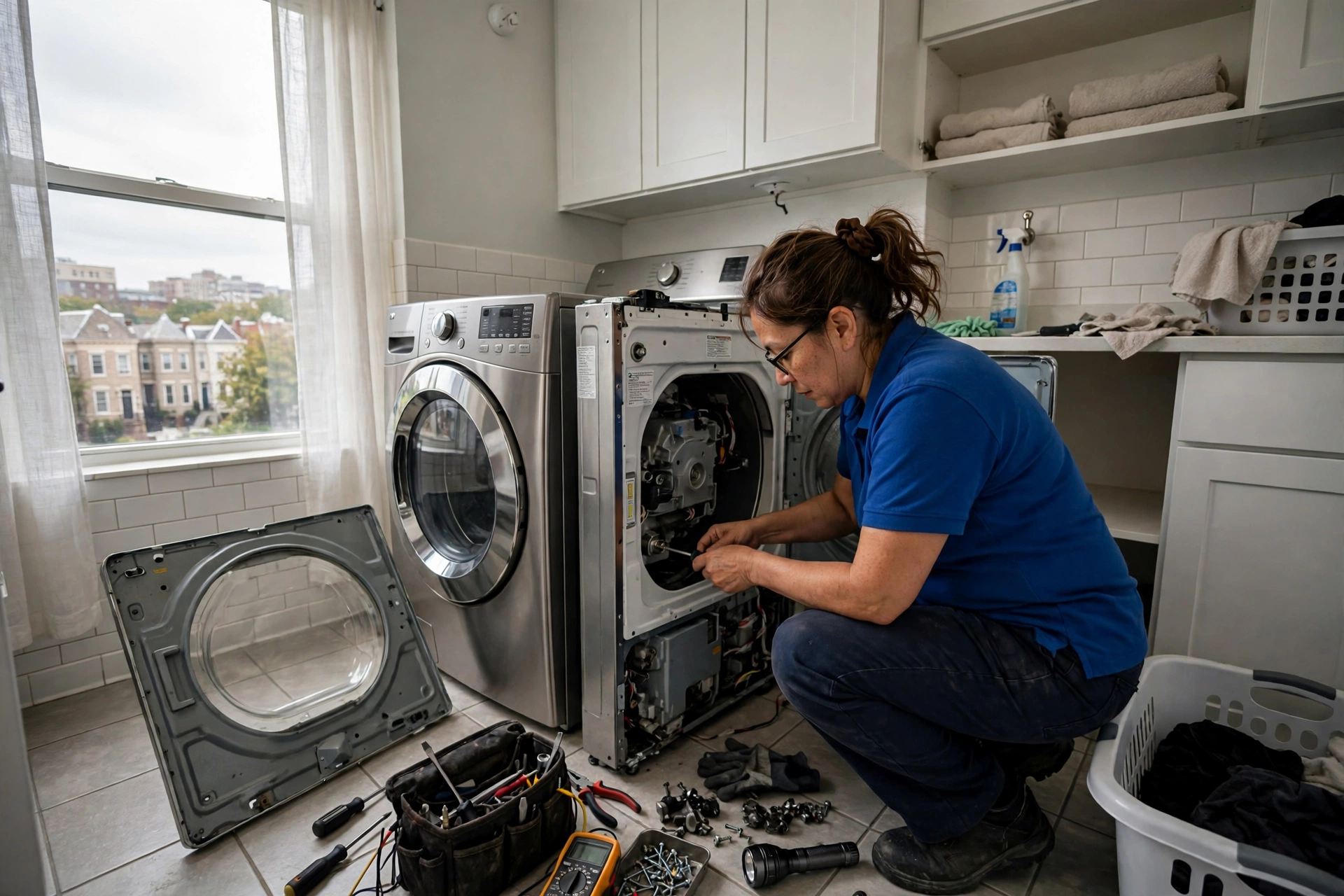
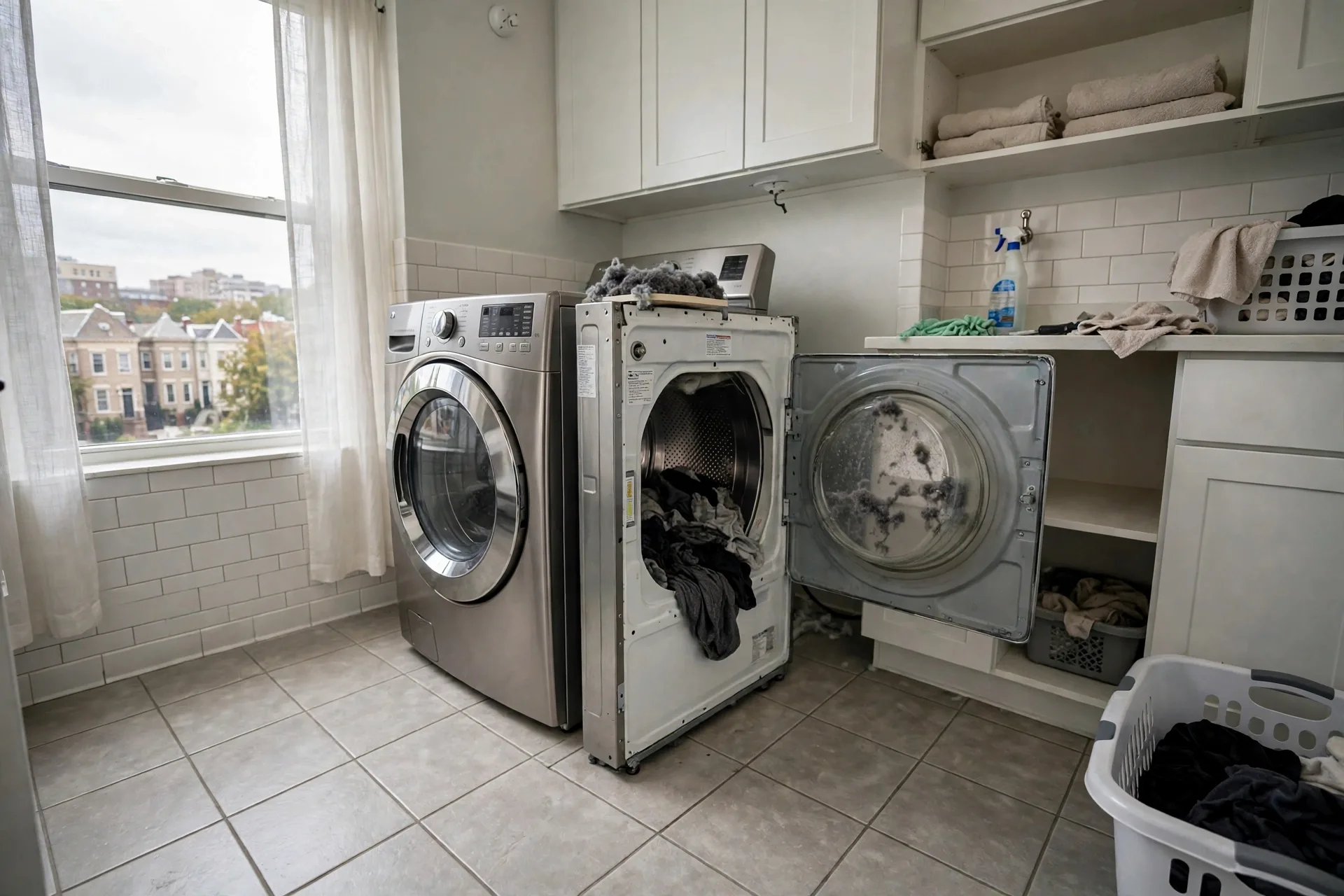
Recent Project: Dryer Repair in Dupont Circle
BEFOREAFTER
A call from Dupont Circle: Dryer shutting down twenty minutes into cycles. Testing found a vent run packed with lint at the exterior hood. We cleared the vent path, replaced the overheated thermal fuse, and confirmed exhaust temperatures. Condo and co-op rules in buildings from Foggy Bottom to Chevy Chase shape visit planning, and the form is where that planning starts.
Turnaround
Finished in one visit.
Final Price
$145
Dryer Repair Cost in Washington, DC
What moves the figure is whether the fault is a wear part or a drive part, and whether the vent needs work alongside the machine to keep the repair from repeating. There are no parts ordered on a hunch: the figure follows the diagnosis, in writing, and it holds for the work described. Basement and in-law units across the District get kitchen grade diagnosis, not a lesser verdict.
Why Washington Calls Washington DC Appliance Repair Co for Dryer Repair
Our rule with dryers is to repair the system, not the symptom: the part that failed, the airflow that stressed it, and a test load dried on the timer before we leave. If the repair stops making sense at any point in the diagnosis, you hear it at that point, with the numbers. That rule has cost us jobs and earned us the neighborhood, and it is not changing. Anacostia and Congress Heights households get the identical diagnostic standard as any address in the city; the map changes nothing.
Request an Appliance Repair Quote in Washington, DC
Use the quote form to describe the symptom as you experience it. The plainer the description, the faster the diagnosis starts when we arrive.
Frequently Asked Questions
Why does my dryer tumble but not heat?
On electric models, an open heating element or thermal fuse; on gas models, the igniter or valve coils. All are meter tests, and the repair is quoted from the test result, not from the symptom. The District's housing runs from Capitol Hill rowhouses to Cleveland Park colonials, and every diagnosis starts with the building in front of us.
My dryer takes two cycles to dry. Is it the dryer or the vent?
Statistically it is the vent, and it is the first thing we check, because replacing dryer parts for a duct problem helps no one. The airflow test settles it in minutes. Summer storm flickers age control boards across whole wards at once here.
Is it worth replacing a dryer heating element?
Almost always. The element is a wear part with a fair price, and a dryer with a sound drum and motor has years left after one. The exception is a machine with several systems failing at once, and we will show you that math on the visit. A repair in the District is proven under load before it is called finished, rowhouses and high rises alike.
What does the diagnostic visit cost?
The visit runs $75 to $125 in the published guides, credited toward the repair in the usual arrangement, and it covers the vent side of the diagnosis too. Petworth, Shaw, and Columbia Heights rentals route turnover work through written findings as standard practice.
Can you replace a dryer belt?
Yes, belts are a standard, inexpensive repair. While the cabinet is open we inspect the rollers and idler that the belt depends on, so you know the state of the whole drive system. Basement and in-law units across the District get kitchen grade diagnosis, not a lesser verdict.
Why does my dryer stop mid cycle?
Mid cycle stops are the machine protecting itself from temperature. We trace airflow and thermostat behavior to find what is running hot. Summer storm flickers age control boards across whole wards at once here.
Get Your Appliance Repair Quote
One form covers repairs and installations alike. Name the appliance, tell us what is happening with it, and we will reply with the price band for the job and the next step: a diagnostic visit, a written figure, and work that starts only on your approval.
Prefer to talk it through first? Send the form and we will call you back at the number you give us.